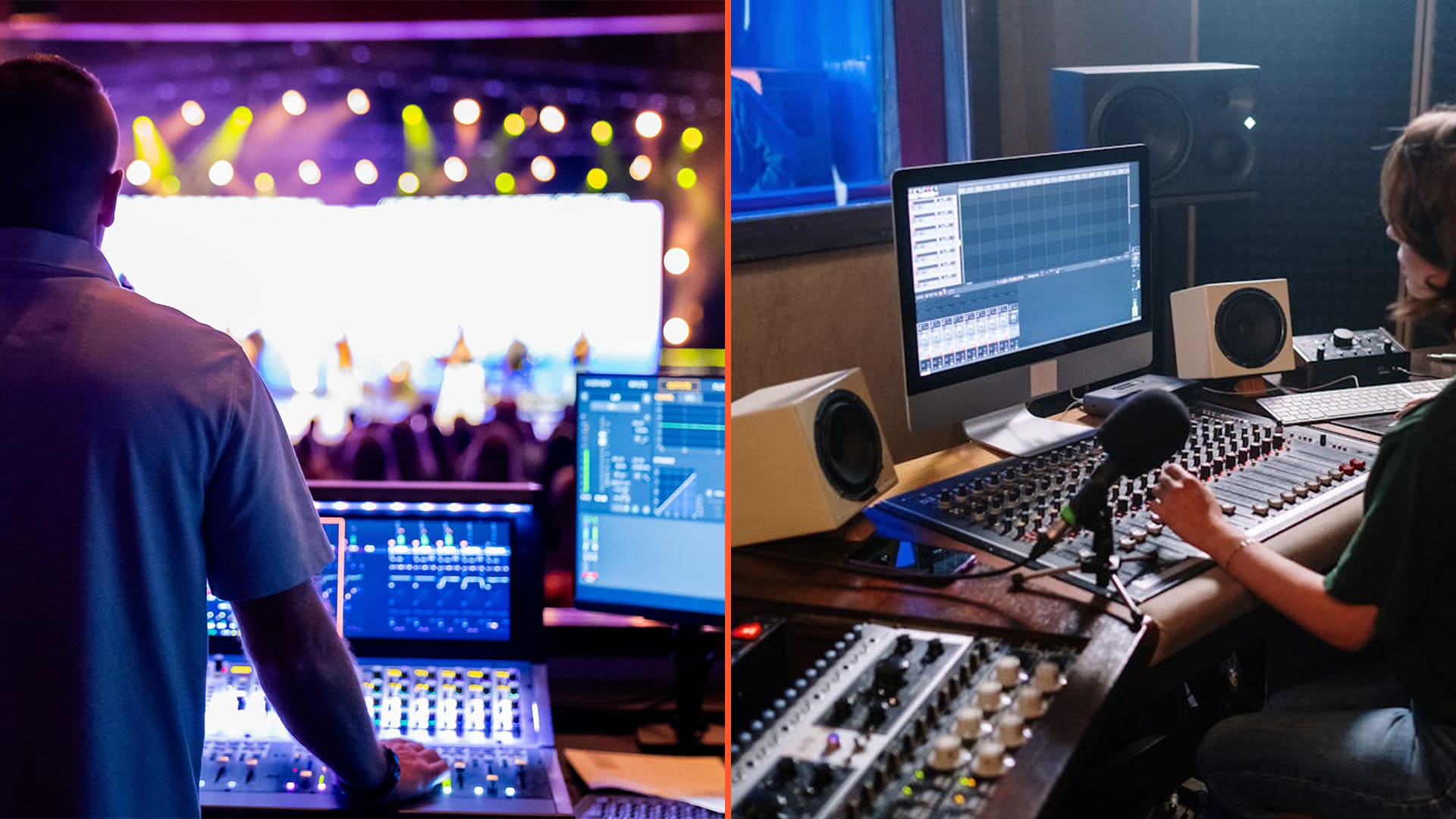
Whether you’re just starting your journey in audio or considering a professional career in sound, understanding the difference between studio mixing and live mixing is one of the most foundational skills you can build. Both disciplines demand distinct mindsets, tools, and techniques — and mastering them opens up a much broader range of career opportunities.
What is Studio Mixing and Live Mixing?
Before diving into the differences, let’s define both terms clearly so you have a solid foundation.
Studio Mixing
Studio mixing is the process of combining and balancing recorded audio tracks inside a controlled, soundproof environment — after the recording session is complete. Engineers have unlimited time to refine every detail.
- Done after recording is complete
- Quiet, soundproof, controlled space
- Uses DAWs (Pro Tools, Logic Pro, Ableton) and plugins
- Unlimited editing and revision time
- Focus: perfection, detail, and polished output
Live Mixing
Live mixing means controlling audio in real time during concerts, weddings, corporate events, or live shows — as the performance unfolds. There is no chance to stop, rewind, or fix mistakes afterwards.
- Happens entirely in real time
- Venue acoustics change everything
- Uses hardware mixing consoles and PA systems
- Requires instant decision-making
- Focus: clarity and balance for the live audience
In practice, these two disciplines are deeply connected. A track mixed in a studio is often performed live — meaning engineers who understand both environments can deliver a far more coherent sonic experience from recording to stage.
Difference Between Studio Mixing and Live Mixing: Key Factors
Here is a detailed breakdown of how studio mixing and live mixing differ across the seven critical dimensions every sound engineer must understand.
| Factor | Studio Mixing | Live Mixing |
| Environment | Controlled, soundproof studio | Noisy, unpredictable venue |
| Time | Unlimited — edit anytime | Real-time, no second chances |
| Equipment | DAWs, studio monitors, plugins | Hardware mixers, PA speakers, mics |
| Sound Control | Full control over each track | Limited — affected by sound bleed |
| Pressure Level | Low — revisions always possible | High — mistakes heard live |
| Primary Goal | Perfect, polished final output | Clear, balanced sound for the crowd |
| Mistakes | Easily fixed in post | Immediately heard by everyone |
Live mixing requires quick thinking, proper setup, and real-time control. To build real-world skills, read our guide on Top Tips for Mixing a Live Show, where we break down practical techniques used by professionals during live events.
Skills Required for Studio Mixing vs Live Mixing
Both paths require strong audio fundamentals, but the competencies that set you apart in each environment are quite different.
Studio Mixing Skills
- Advanced EQ and compression techniques
- Plugin knowledge — reverb, delay, saturation, limiting
- Critical and reference listening
- Attention to detail and patience
- DAW proficiency (Pro Tools, Logic, Ableton)
- Stereo imaging and depth control
Live Mixing Skills
- Fast decision-making under pressure
- Signal flow and gain structure mastery
- Feedback elimination and control
- Venue acoustic adaptation
- Monitor mix management
- Mic placement and live troubleshooting
At Monks Music Academy, students receive hands-on training in both environments — including real studio sessions and live event setups — so they’re confident in either role before they graduate.
Career Opportunities in Studio and Live Mixing
Learning both sides of audio engineering dramatically expands your career options in the music and events industry. Here are the key roles you can pursue:
- Studio Sound Engineer
- Live Sound Engineer
- Mixing & Mastering Engineer
- Event Sound Technician
- Music Producer
- Broadcast Audio Engineer
Professionals who are fluent in both studio and live mixing are in high demand — especially for tour productions, film scoring stages, and hybrid live-streaming events. Monks Music Academy provides training and placement support for all these career paths.
Which Should You Learn — Studio or Live Mixing?
The honest answer is: both. But your starting point can depend on your personality and goals.
If you enjoy calm, detail-oriented work and love crafting a track to perfection, studio mixing may feel more natural to start. If you thrive on energy, quick thinking, and performing under pressure, live mixing might be your calling.
Studio knowledge directly improves your live mixing quality — because you understand how audio is meant to sound. And live experience sharpens your speed and confidence in the studio. The best engineers are comfortable in both worlds.
Real-world example: Most major concerts begin with tracks mixed in the studio, which are then performed live — with the live sound engineer recreating and adapting that mix in real time for each unique venue.
Frequently Asked Questions
What is the main difference between studio mixing and live mixing?
Studio mixing is done after recording in a controlled, quiet environment where you can edit freely. Live mixing happens in real time during events, with no ability to undo or revise — demanding speed and confidence.
Which is harder — studio mixing or live mixing?
Both have unique challenges. Studio mixing demands patience, a trained ear, and technical depth. Live mixing demands speed, adaptability, and the ability to troubleshoot instantly in a noisy environment. Most engineers find live mixing more stressful and studio mixing more technically nuanced.
What equipment is used in studio vs live mixing?
Studio mixing uses DAWs (like Pro Tools, Logic Pro, or Ableton), studio monitors, and software plugins. Live mixing uses hardware mixing consoles, PA speakers, microphones, stage monitors, and outboard gear.
Can I learn both studio and live mixing?
Absolutely — and it is highly recommended. Most professional sound engineers are trained in both areas. Academies like Monks Music Academy offer combined training programs that cover both disciplines with practical experience.
Where can I learn studio and live mixing in Kerala?
Monks Music Academy offers professional training in both studio and live mixing, with real studio access and live event experience as part of the curriculum.
How long does it take to learn sound mixing?
With structured training, you can grasp the fundamentals of both studio and live mixing within a few months. Becoming proficient takes ongoing practice, real projects, and mentorship — typically 6–12 months of dedicated study.
Who should learn studio and live mixing?
Students, musicians, DJs, and anyone interested in a career in sound engineering. If you want to work in music, live events, film, television, or broadcasting, understanding both is essential.
Conclusion
The difference between studio mixing and live mixing comes down to environment, approach, and mindset. Studio mixing offers perfection and control — live mixing demands speed and adaptability. Both are essential in today’s audio industry, and learning both will make you a skilled, confident, and highly employable sound engineer.
If you want to build a real career in audio, practical training is the best step forward — and that’s exactly what you get at Monks Music Academy.